力を合わせて
Working Together
1. Listen & Read
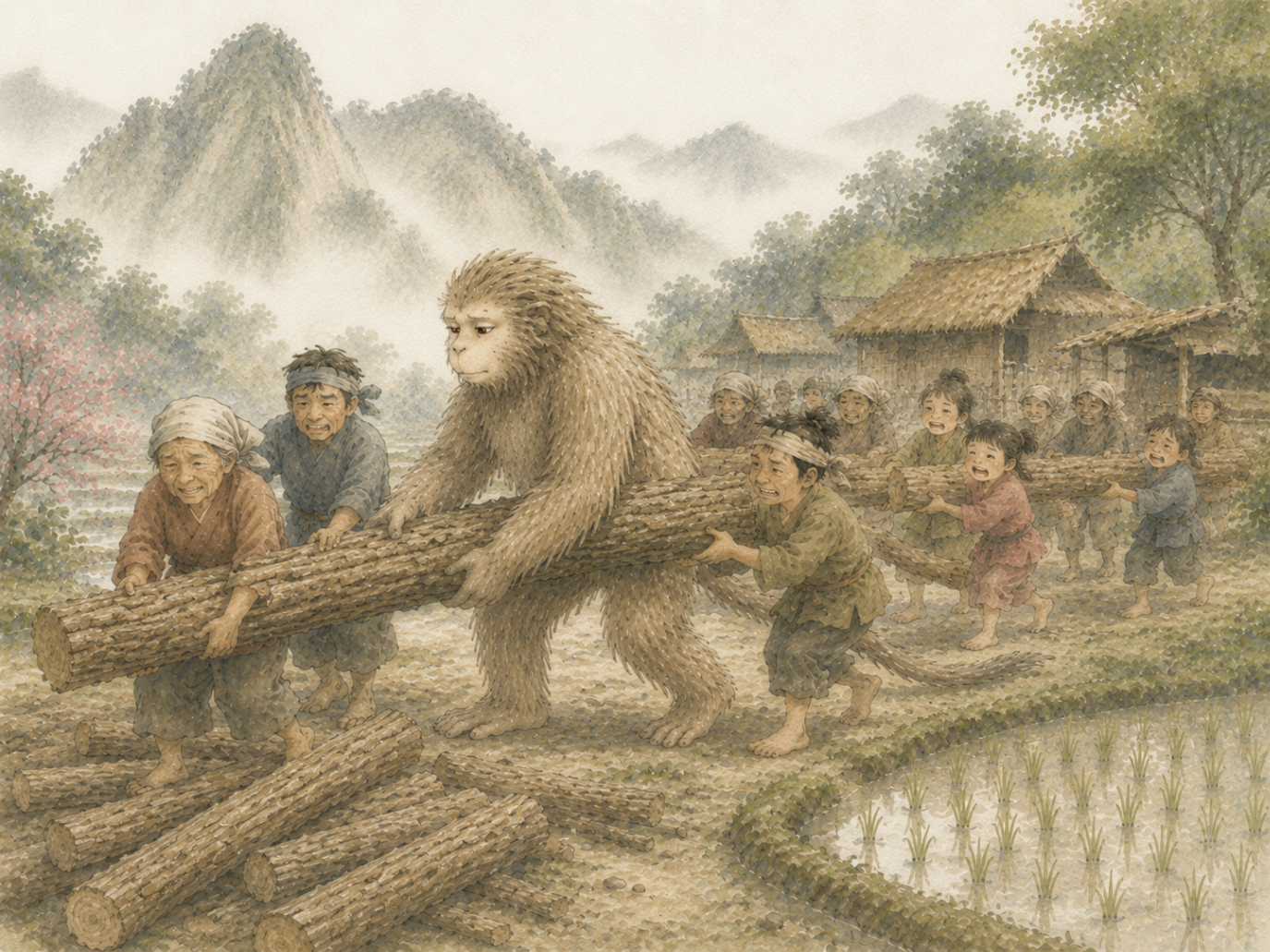
Aka headed for the village. Fighting back tears, he began carrying huge logs to help rebuild the village. The villagers were afraid to approach him because of the fierce look on his face. Even though no one helped him, he kept working by himself quietly.
Then, an old lady summoned the courage to help him. She was the first villager to whom Aka gave gold. As time went by, two people came, then three, then four. The number of people increased little by little. Five, six, seven, eight, nine, ten... the circle of support grew fast.
2. 単語
木のかんぶを切ったもの。
“... he began carrying huge logs to help rebuild the village.”
……流されてきた木々を運び始めました。
泣くときに、目から流れ出る水のこと。
“Fighting back tears, he began carrying huge logs ...”
なみだをこらえながら、丸太を運び始めました……
とてもきびしくて、こわい様子。
“... because of the fierce look on his face.”
……ひっしにはたらくアカの顔つきがおそろしくて……
音や声を出さず、しずかにするようす。
“... he kept working by himself quietly.”
……アカはもくもくと休むことなくはたらきつづけました……
こわがらずに、正しいことをしようとする心の力。
“... an old lady summoned the courage to help him.”
……おばあさんが、勇気を出してアカを手つだい始めました。
丸いかたちや、あつまった人のわのこと。
“... the circle of support grew fast.”
……どんどんそのわは広がっていきました。
3. 熟語・表現
泣きそうな気もちをおさえること。
“Fighting back tears, he began carrying huge logs ...”
なみだをこらえながら、丸太を運び始めました……
何かをするのをこわがっている、というようす。
“The villagers were afraid to approach him ...”
村人たちはだれ一人として近よることができませんでした……
同じことをずっと続けることを表します。
“... he kept working by himself quietly.”
……アカはもくもくと休むことなくはたらきつづけました。
こわい気もちをのりこえて、何かをする、という意味。
“... an old lady summoned the courage to help him.”
……おばあさんは、勇気を出してアカを手つだい始めました。
少しずつ時間がすぎていくことを表します。
“As time went by, two people came, then three, then four.”
二人、三人、四人と少しずつその人数はふえていき……
4. 文法ポイント
Even though 〜(〜だとしても、〜だけれど)
“Even though no one helped him, he kept working by himself quietly.”
だれも手つだってくれなかったけれど、アカはひとりでしずかにはたらきつづけました。
「Even though + 主語 + 動詞」で「〜であっても」を表します。
▶もっと詳しく
- although よりも強い、反対のことをつなぐ言い方。
“Even though it was cold, he went out.”
寒かったけれど、彼は出かけました。
- even though と but を両方使う。
keep + 〜ing(〜し続ける)
“He kept working by himself quietly.”
アカはひとりでしずかにはたらきつづけました。
「keep + ~ing」で「〜し続ける」を表します。
▶もっと詳しく
- keep のうしろは、必ず動詞の ~ing 形。
“She kept smiling.”
彼女はほほえみつづけました。
- keep のうしろを to 動詞 にする。
..., then ..., then ...(そして、そして…と続く)
“Two people came, then three, then four.”
二人、三人、四人と少しずつその人数はふえていきました。
「then」を並べると、じかんじゅんにおきたできごとをつなげられます。
▶もっと詳しく
- ,(コンマ)で区切って、少しずつ変化していく様子を表します。
“First one, then two, then many.”
はじめは一つ、それから二つ、そしてたくさん。
- and thenの and をわすれて意味が伝わりにくくなる。