本当の友だち
True Friendship
1. Listen & Read
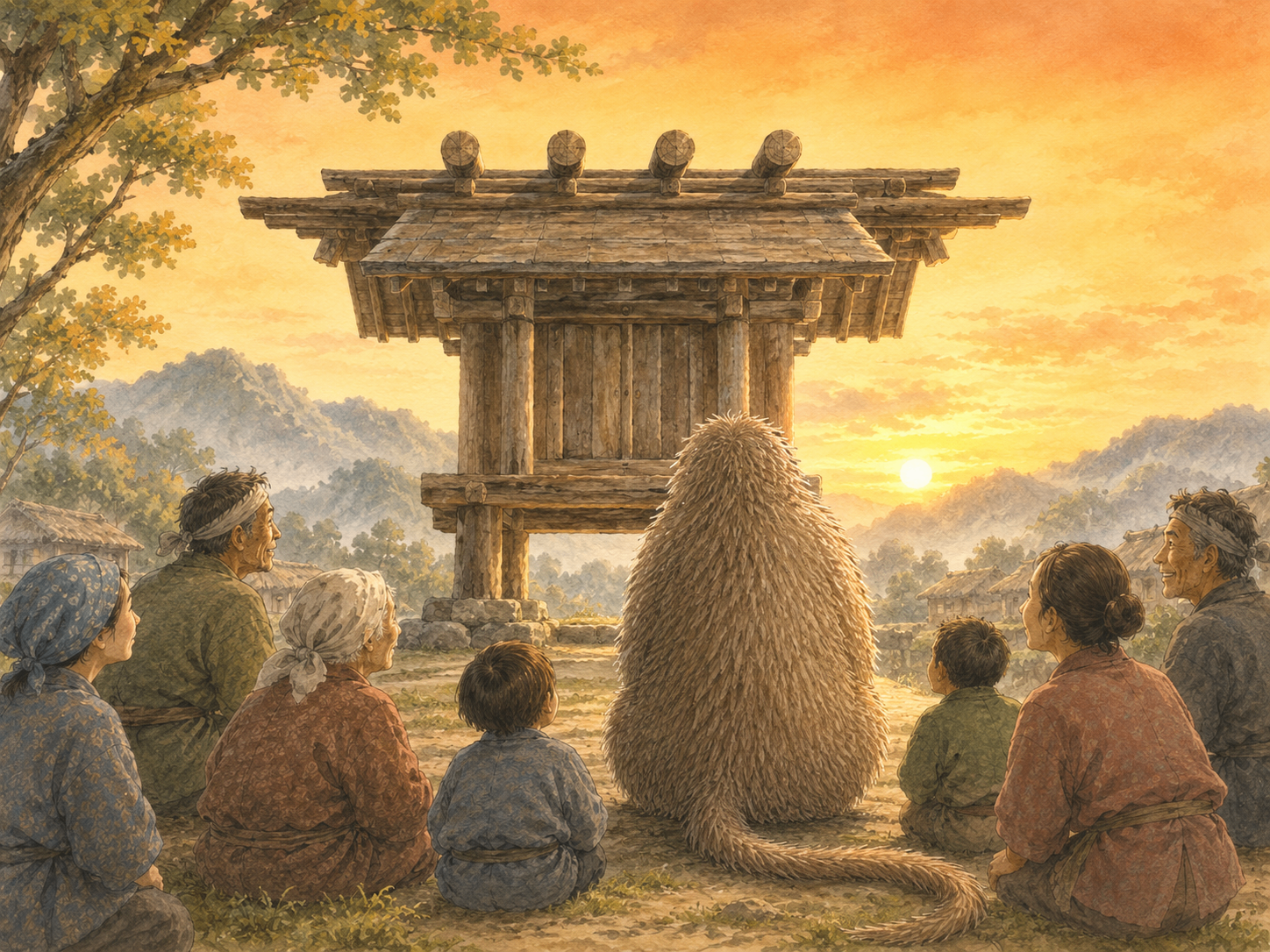
By the time Aka and the villagers finished rebuilding the village, Aka had become friends with all the villagers. Aka helped the villagers with heavy lifting, taught their children what he learned from Ao about the mountain, played tag with them and so on.
Aka and the villagers built a shrine on the hill together to worship the God of Water as a token of their gratitude to the dragon. The shrine on the hill watched over all the people and protected the village and the mountain.
2. 単語
こわれたものを、もう一度つくりなおすこと。
“By the time Aka and the villagers finished rebuilding the village, Aka had become friends with all the villagers.”
村が元通りになったころには、アカはすっかり村人たちとなかよくなりました。
だれかに知しきや、やり方を伝えること。
“taught their children what he learned from Ao about the mountain”
……子どもたちにアオから教わった山のことを教えてあげたり……
だれかにありがとうと思う、あたたかい気もち。
“as a token of their gratitude to the dragon”
……りゅうへのかんしゃの気持ちをこめて……
神さまを大切にして、心をこめておがむこと。
“Aka and the villagers built a shrine on the hill together to worship the God of Water as a token of their gratitude to the dragon.”
アカと村人は、かんしゃの気持ちをこめて、水の神様をまつる神社をたてました。
神さまをまつる場所、たてもの。
“Aka and the villagers built a shrine on the hill together to worship the God of Water as a token of their gratitude to the dragon.”
アカと村人は、かんしゃの気持ちをこめて、水の神様をまつる神社をたてました。
だれかをやさしく見つづけて、まもること。
“The shrine on the hill watched over all the people and protected the village and the mountain.”
高台にたてられたりゅうの社はずっと、山とそのふもとにくらす人々を見守りつづけたのでした。
3. 熟語・表現
何かが起こる時までには、を表します。
“By the time Aka and the villagers finished rebuilding the village, Aka had become friends with all the villagers.”
村が元通りになったころには、アカはすっかり村人たちとなかよくなりました。
だれかとなかよくなって、友だちになることを表します。
“Aka had become friends with all the villagers.”
アカはすっかり村人たちとなかよくなりました。
だれかを、あることで手つだうことを表します。
“Aka helped the villagers with heavy lifting.”
アカは村人たちの力仕事を助けてあげました。
気もちを形にして表すときに使う言い方です。
“Aka and the villagers built a shrine on the hill together to worship the God of Water as a token of their gratitude to the dragon.”
アカと村人は、りゅうへのかんしゃのしるしとして、水の神様をまつる神社を高台にたてました。
いくつか例をならべたあとに「〜など」とつけくわえる言い方です。
“Aka helped the villagers with heavy lifting, taught their children what he learned from Ao about the mountain, played tag with them and so on.”
力仕事を助けてあげたり、子どもたちにアオから教わった山のことを教えてあげたり、いっしょに追いかけっこをしたり・・・。
4. 文法ポイント
By the time 〜(過去形), 主語 + had + 過去分詞
“By the time Aka and the villagers finished rebuilding the village, Aka had become friends with all the villagers.”
村が元通りになったころには、アカはすっかり村人たちとなかよくなっていました。
「By the time + 主語 + 過去形, 主語 + had + 過去分詞」で、あるときまでにすでに終わっていたことを表します。
▶もっと詳しく
- By the time のあとは過去形(finished)、主節は had + 過去分詞(had become)にします。
- 過去のあるとき「までに」すでに完了していたことをはっきりさせる形。
“By the time I arrived, the show had started.”
私が着いたときには、ショーはもう始まっていました。
- 両方の動詞を過去形だけで書いてしまい、前後関係がわかりにくくなる。
関係代名詞 what(〜すること/もの)
“taught their children what he learned from Ao about the mountain”
子どもたちに、アオから教わった山のことを教えてあげました。
「what + 主語 + 動詞」で「〜すること/〜したもの」というひとつのまとまりをつくれます。
▶もっと詳しく
- この what は「何?」ではなく、「〜すること/もの」という意味のまとまりをつくります。
- ここでは what he learned from Ao about the mountain で「アオから教わった山のこと」を表しています。
“I understood what she said.”
私は彼女が言ったことがわかりました。
- what のあとに the thing をつけてしまう(what だけで「もの・こと」を表せます)。
to + 動詞(〜するために)
“Aka and the villagers built a shrine on the hill together to worship the God of Water as a token of their gratitude to the dragon.”
アカと村人は、りゅうへのかんしゃのしるしとして、水の神様をまつるために神社を高台にたてました。
「to + 動詞のもとの形」で目的(〜するために)を表します。
▶もっと詳しく
- ここでは to worship the God of Water が「水の神様をまつるために」という目的を表しています。
- 「なぜそれをしたのか」を表せる、とてもよく使う形。
“We eat to live.”
私たちは生きるために食べます。
- to のうしろを ~ing 形にしてしまう。