水が引いていく
The Floodwaters Recede
1. Listen & Read
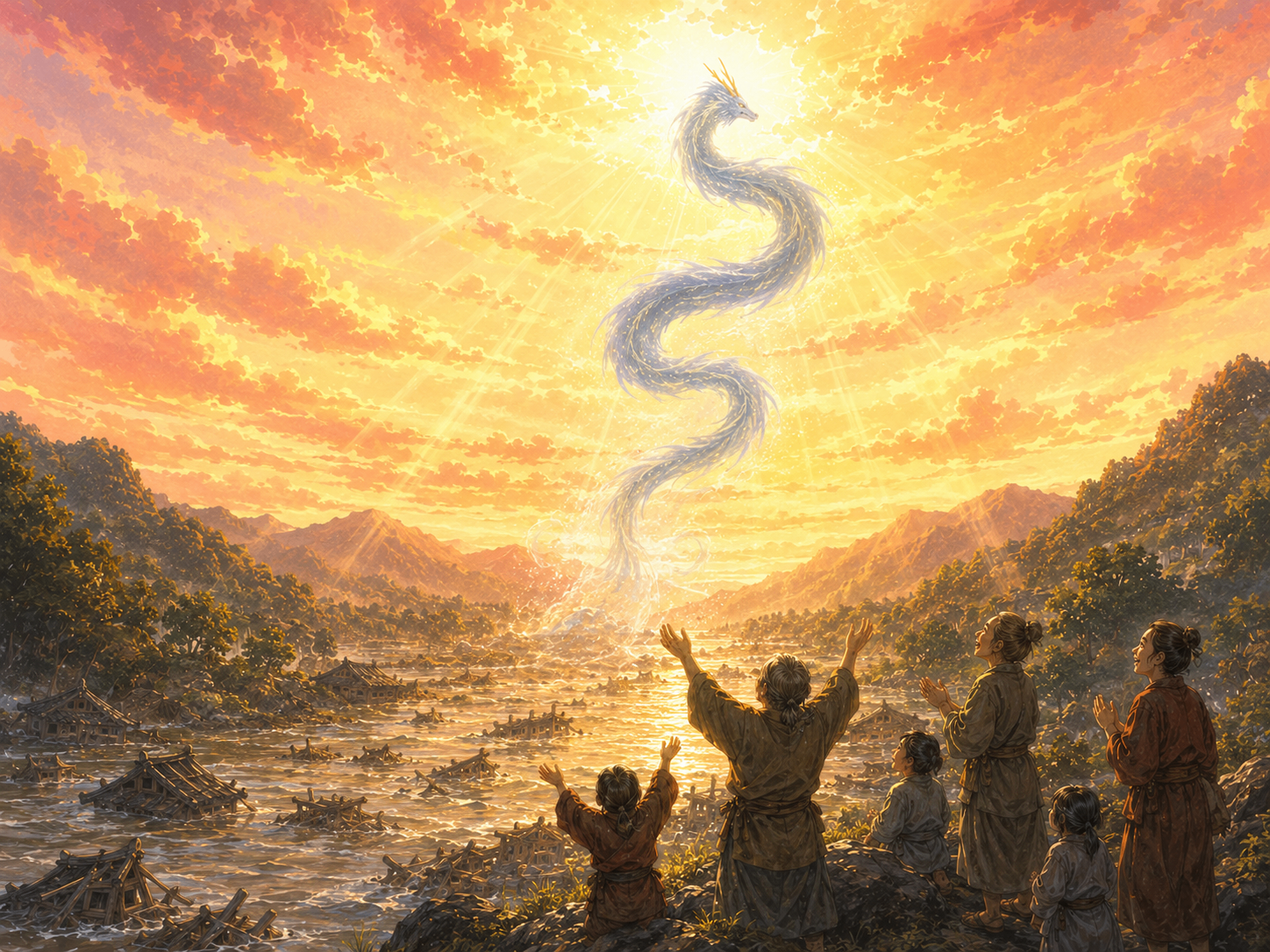
The blue dragon breathed blue fire and began drinking the water. The water, which was at the waist of the villagers, started to recede rapidly. After the dragon had drained the water, it soared high into the air and flew away beyond the sky.
The rain let up and a red sunset glowed in the sky. "Yes! We are saved." "The God of Water has saved us from the disaster!" "Thank you!"
2. 単語
空気などを口や鼻から出したり、すったりすること。
“The blue dragon breathed blue fire ...”
青いりゅうは、青白い火をはきました……
少しずつ後ろへ動いていくこと。
“The water ... started to recede rapidly.”
水はみるみるうちに引いていきました。
水などを、外に出して空にすること。
“After the dragon had drained the water ...”
すっかり水がなくなったあと……
とりや飛行機が、空高く飛んでいくこと。
“... it soared high into the air ...”
……りゅうは天高くとびあがり……
日がしずむこと。また、そのころの空の色。
“A red sunset glowed in the sky.”
空は夕やけでまっ赤にそまりました。
きけんから、いのちをたすけ出すこと。
“The God of Water has saved us from the disaster!”
水のかみさまが、わたしたちをすくってくれたんだ!
3. 熟語・表現
雨や風などが少なくなること。
“The rain let up ...”
雨はあがりました……
空を飛んでどこかへ行ってしまうこと。
“... flew away beyond the sky.”
……空のかなたに去っていきました。
きけんからすくいだされること。受け身の形。
“We are saved.”
たすかった!
何かのきけんから、たすけ出すことを表します。
“The God of Water has saved us from the disaster!”
水のかみさまが、わたしたちをわざわいからすくってくれた!
空の高いところにむかって、を表します。
“... it soared high into the air ...”
……りゅうは天高くとびあがり……
4. 文法ポイント
and + 動詞(〜して、そして〜した)
“The blue dragon breathed blue fire and began drinking the water.”
青いりゅうは、青白い火をはきながら、水をすいこんでいきました。
and で二つの動作をつなぐと、続けて起きたことを表せます。
▶もっと詳しく
- and のうしろの動詞も、同じ時制(過去なら過去形)にそろえます。
“He came in and sat down.”
彼は入ってきて、すわりました。
- and のうしろだけ現在形にしてしまう。
After ... had + 過去分詞(〜したあとで)
“After the dragon had drained the water, it soared high into the air ...”
りゅうがすっかり水をなくしたあと、天高くとびあがりました。
「After + 主語 + had + 過去分詞」で「〜したあとで」を表します。
▶もっと詳しく
- 「したあと」を先に置き、そのあとの出来事を続けます。
- 簡単な言い方では「After + 過去形」も使えます。
“After she had left, I called her.”
彼女が出ていったあと、電話しました。
- had のかわりに has を使ってしまう(過去のことなので had)。
have/has + 過去分詞(〜してくれた、〜したことがある)
“The God of Water has saved us from the disaster!”
水のかみさまが、わたしたちをすくってくれた!
「have/has + 過去分詞」で、過去のできごとと今がつながっていることを表します。
▶もっと詳しく
- 「今ちょうど〜した」「〜したことがある」などの意味。
- have は主語が I, you, we, they のとき、has は he, she, it のとき。
“I have finished my homework.”
しゅくだいを終えました。
- 過去形と現在完了を混同する。