自分にできること
What Aka Can Do
1. Listen & Read
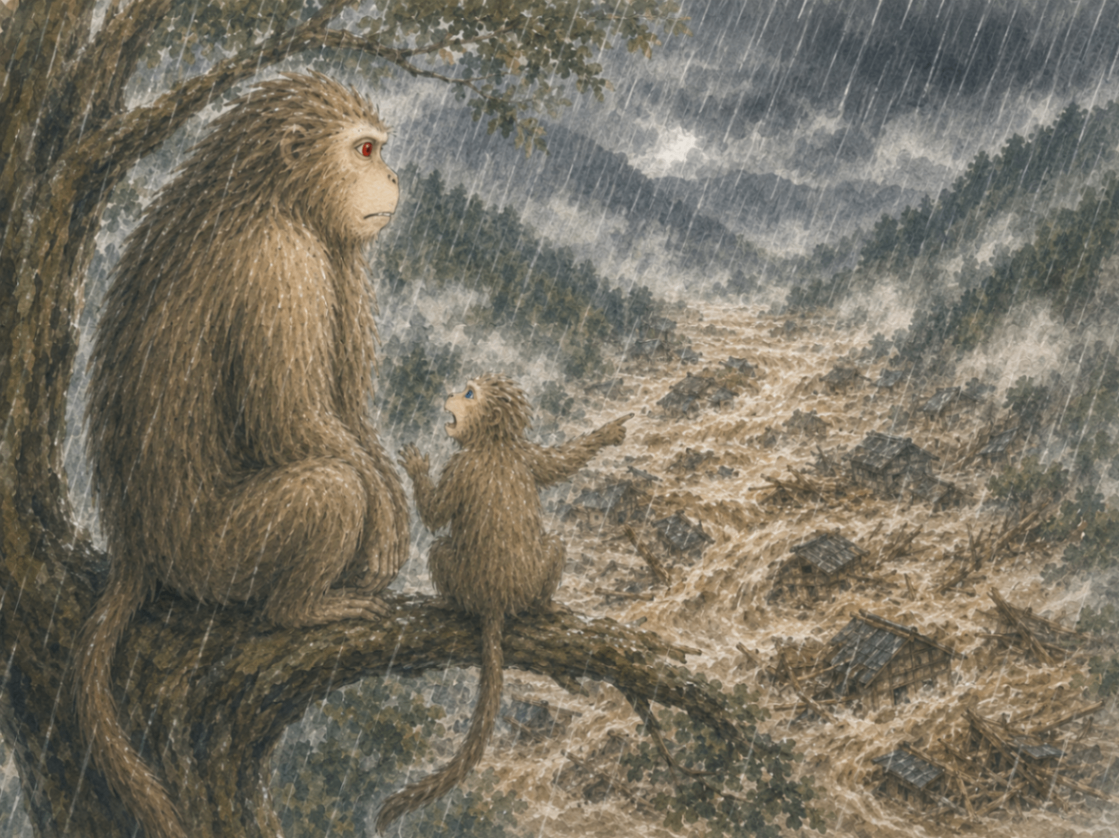
At that time, Aka and Ao were at the top of the tallest tree on the mountain. They were gazing down at the flooded village. "It's my fault!" said Aka. "I am the one who dug up so many rocks from the ground. If this continues, all the villagers will drown!" Aka was at a loss and just stood still in the tree.
Ao looked down for a while at the flooded village, then turned to Aka and said "listen, Aka, you can’t make friends with anyone just by giving them things. Be compassionate, that is more important than anything else. You are kind and strong. Think of what you can do for the villagers. I’m going to see King Shiro.”
2. 単語
tall(高い)の最上級で、「もっとも高い」の意味。
“... at the top of the tallest tree on the mountain.”
……山の中で一ばん高い木の上に登り……
長い時間、動かずに何かを見ること。
“They were gazing down at the flooded village.”
村の様子(水につかった村)を見ていました。
だれかがまちがったことをした責任のこと。
“It's my fault!”
ぜんぶぼくのせいだ!
水の中で息ができなくなり、いのちを落とすこと。
“... all the villagers will drown!”
……村人たちは死んでしまう!
相手の気もちを大切にする心のあること。
“Be compassionate, that is more important than anything else.”
相手のことを思いやる気持ちが何よりも大切なんだ。
動かないでいる様子。
“Aka was at a loss and just stood still in the tree.”
アカはどうしたらよいかわからず、木の上で立ちつくしていました。
3. 熟語・表現
何をすべきかまよっている様子。
“Aka was at a loss and just stood still in the tree.”
アカはどうしたらよいかわからず、木の上で立ちつくしていました。
上から下のものを見ることを表します。
“Ao looked down for a while at the flooded village ...”
アオはしばらくこう水になった村を見つめていました……
ほかのどんなものよりも大切、という意味。
“Be compassionate, that is more important than anything else.”
相手のことを思いやる気持ちが何よりも大切なんだ。
「なにを〜できるか」など、考える対象を what で示す言い方。
“Think of what you can do for the villagers.”
自分が村人たちのために何ができるかを考えなさい。
顔や体を、その方向にむけること。
“... then turned to Aka and said ...”
……アカに向かって言いました……
4. 文法ポイント
最上級 the -est / the most 〜(もっとも〜)
“the top of the tallest tree on the mountain”
山の中で一ばん高い木の上
形容詞のうしろに -est をつけて「もっとも〜」を表します。
▶もっと詳しく
- 短い形容詞は the ~est の形。
- 長い形容詞は the most 〜。
“This is the biggest apple.”
これは一ばん大きいりんごです。
- the をつけわすれる。
命令文(〜しなさい)
“Think of what you can do for the villagers.”
自分が村人たちのために何ができるかを考えなさい。
動詞のもとの形で文を始めると、「〜しなさい」の命令文になります。
▶もっと詳しく
- Please をつけるとやわらかい言い方になります。
- Don't 〜 で「〜するな」。
“Be kind.”
やさしくしなさい。
- 主語 You を書いてしまう。
what you can do(〜できること)
“Think of what you can do for the villagers.”
自分が村人たちのために何ができるかを考えなさい。
「what + 主語 + can + 動詞」は「〜ができること/何が〜できるか」を表す名詞のかたまりになります。
▶もっと詳しく
- think, know, understand などの動詞のうしろによく置かれます。
“I know what you can do.”
きみに何ができるか知っています。
- what のうしろの語順を疑問文の順にしてしまう。