山のいかり
The Mountain's Anger
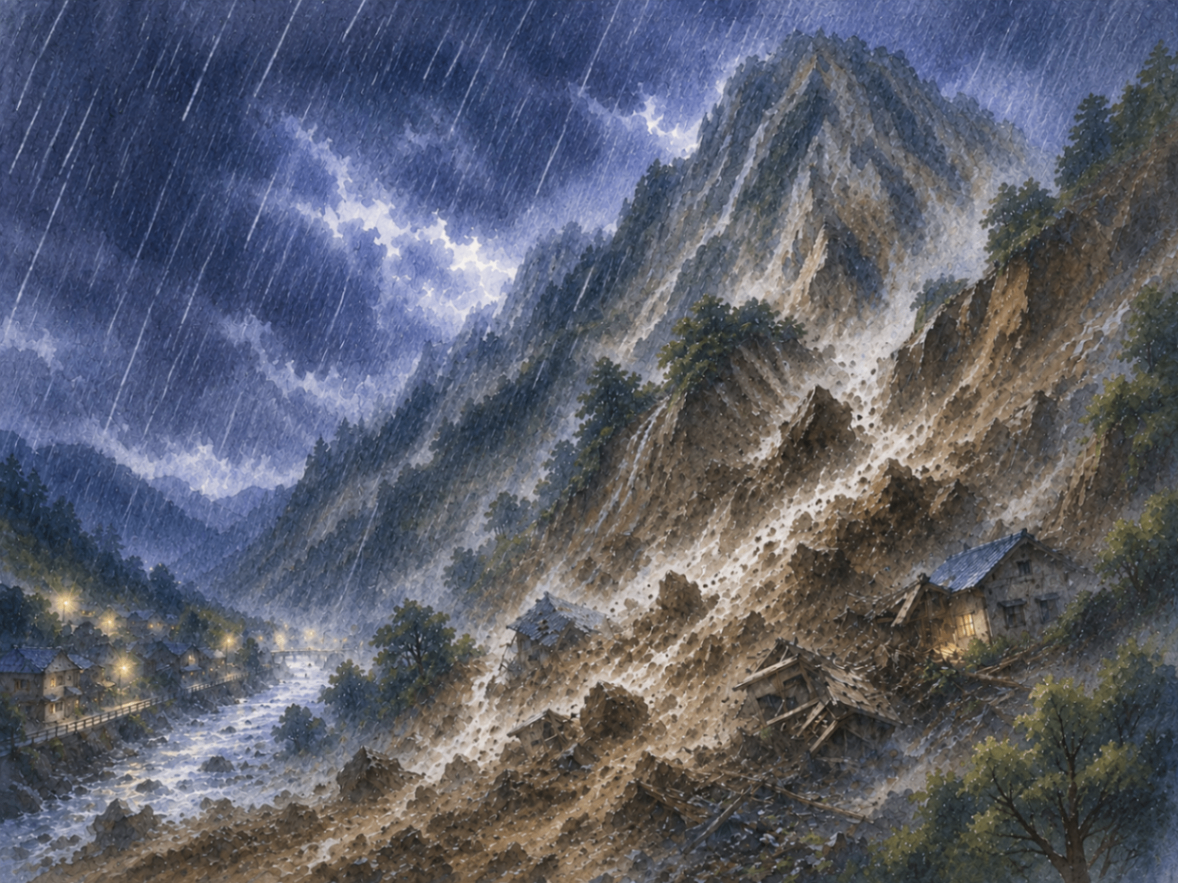
1. Listen & Read
One evening, it began to rain. Soon after, black clouds concealed the moon, heavy rain started to pour. The earth around the mountain had become loose because Aka had dug up so many rocks. Trees and plants were swept away by the raging waters. The heavy rain caused massive landslides and many of the houses in the village were washed away. The villagers escaped to a hill with their lives, but the water was rapidly approaching the hill.
2. 単語
空にうかんでいる白や黒のかたまり。
“... black clouds concealed the moon ...”
……まっ黒な雲に月がかくれてしまい……
見えないようにおおうこと。
“... black clouds concealed the moon ...”
……雲が月をかくしてしまい……
しっかりかたまっていないこと。
“The earth around the mountain had become loose ...”
山の土はやわらかくなっており……
水などで、いっきに流してしまうこと。
“Trees and plants were swept away by the raging waters.”
木や草もどんどん流されていきます。
川などがあふれて、まちに水がひろがること。
“The heavy rain caused massive landslides ...”
はげしい雨は大きな地すべりを引き起こしました……
山ほど高くない、少し高くなっている土地。
“The villagers escaped to a hill ...”
村人たちは高台ににげてきました……
3. 熟語・表現
何かをやり始めることを表す言い方。
“It began to rain.”
雨がぽつりぽつりとふってきました。
少しあとに何かが起こることを表します。
“Soon after, black clouds concealed the moon ...”
さきほどまで見えていた月はまっ黒な雲にかくれてしまい……
「because + 主語+動詞」と同じ意味ですが、うしろに名詞をとります。
“The earth around the mountain had become loose because Aka had dug up so many rocks.”
アカがたくさんの岩をほり出したために、山の土はゆるくなっていました。
命の危険をおかしてでも、という意味。
“The villagers escaped to a hill with their lives ...”
村人たちは命からがら高台ににげてきました……
たくさんふる、強い雨のこと。
“The heavy rain caused massive landslides ...”
はげしい雨が大きな地すべりを引き起こしました……
4. 文法ポイント
受け身(〜される)
“Trees and plants were swept away by the raging waters.”
木や草も、あれくるう水に流されていきました。
「be動詞 + 過去分詞」で「〜される」という受け身を表します。
▶もっと詳しく
- だれがしたかを言うときは by 〜 を使います。
- 動作を受ける側を主語にします。
“The house was built by my father.”
その家は父によって建てられました。
- 過去形と過去分詞をまちがえる(swept は過去も過去分詞も同じ形)。
had + 過去分詞(それより前に〜していた)
“The earth had become loose because Aka had dug up so many rocks.”
アカがたくさんの岩をほり出していたために、山の土はゆるくなっていた。
過去のあるときより「さらに前」に起こっていたことを表します。
▶もっと詳しく
- 「had + 過去分詞」が過去完了。
- 過去のできごとと過去のできごとの、前後関係を明らかにします。
“When I got home, he had already left.”
家に着いたとき、彼はもう出ていました。
- 過去形と過去完了を混同する。
cause 〜(〜を引き起こす)
“The heavy rain caused massive landslides ...”
はげしい雨が大きな地すべりを引き起こしました……
「cause + 名詞」で「〜を引き起こす/原因になる」を表します。
▶もっと詳しく
- 何かの結果として悪いことが起きたときによく使われます。
“Bad weather caused the accident.”
悪天候がその事故を引き起こした。
- cause と reason をまちがえて使う。