やぶられた約束
The Broken Promise
1. Listen & Read
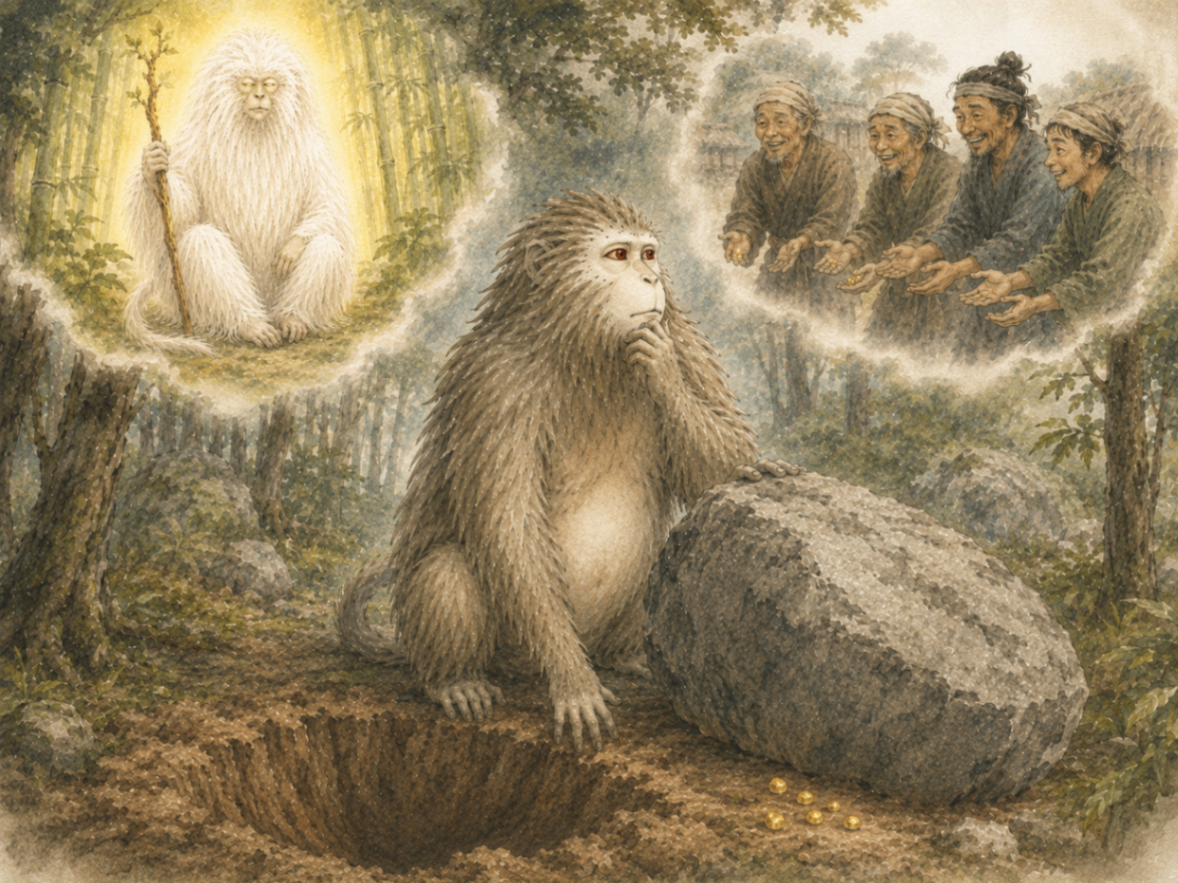
"Never use the power more than twice." "It would bring a great disaster."
Aka thought of Shiro's words but he couldn't forget the villagers’ smiles.
"Once more. It will be all right if it's only once more," he said to himself and dug up another huge rock and tried to change it into gold.
Then, nothing bad seemed to happen.
"Hey, nothing bad happened! King Shiro must have lied about the great disaster because he thought that I would spend all of the gold by myself."
“The more gold I give them, the more friends I will make!", he said to himself as he went up to the mountain and dug up huge rocks and changed them into gold day after day.
2. 単語
「かならず〜する」と伝えたことがら。
“"Never use the power more than twice."”
「ぜったいに三回以上使ってはならない」
おぼえていたことを、思い出せなくなること。
“... he couldn't forget the villagers’ smiles.”
……村人たちのえがおがわすれられません。
きょ大な、ものすごく大きい様子。
“... dug up another huge rock ...”
……大きな岩をほり出して……
何かの出来事が実際に起こること。
“... nothing bad seemed to happen.”
……なにもおきません。
本当ではないことを言うこと。
“King Shiro must have lied about the great disaster ...”
シロさまはうそをついたにちがいない……
同じことが毎日続く様子。
“... changed them into gold day after day.”
……毎日、毎日、次々と金にかえて……
3. 熟語・表現
何かについて考えたり、思い出したりすること。
“Aka thought of Shiro's words ...”
アカはシロの言葉を思い出しました……
「もう一度だけ」の意味。
“Once more. It will be all right if it's only once more.”
あと一回だけ。あと一回だけなら大じょうぶだろう。
「二回」よりさらに多い数を表します。
“Never use the power more than twice.”
ぜったいに三回以上使ってはならない。
だれも手つだわず、自分だけで行うこと。
“... I would spend all of the gold by myself.”
……ぼくが金をひとりじめする……
過去のできごとを、強く予想するときの言い方。
“King Shiro must have lied about the great disaster ...”
シロさまはうそをついたにちがいない……
4. 文法ポイント
Never + 動詞(けっして〜するな)
“Never use the power more than twice.”
ぜったいに三回以上使ってはならない。
命令文の頭に Never や Don't を置くと、「〜するな」の意味になります。
▶もっと詳しく
- Don't よりも Never のほうが強い意味になります。
- うしろは動詞のもとの形。
“Never give up.”
けっしてあきらめてはいけない。
- Never のうしろに to や ~ing をつけない。
seem to 〜(〜のように見える)
“Nothing bad seemed to happen.”
何もおきないように見えました。
「seem to + 動詞」で「〜のように見える/〜と思える」を表します。
▶もっと詳しく
- 「たぶんそうだ」という、はっきり言い切らない言い方。
“He seems to know the answer.”
彼は答えを知っているようです。
- to のうしろを ~ing 形にする。
must have + 過去分詞
“King Shiro must have lied about the great disaster.”
シロさまはうそをついたにちがいない。
「must have + 過去分詞」で、過去のことを「きっと〜したにちがいない」と強く予想します。
▶もっと詳しく
- must は今の予想、must have + 過去分詞 は過去の予想。
“You must have been tired.”
きっとつかれていたにちがいない。
- 過去分詞のかわりに過去形を使ってしまう(例:must had done ✕)。