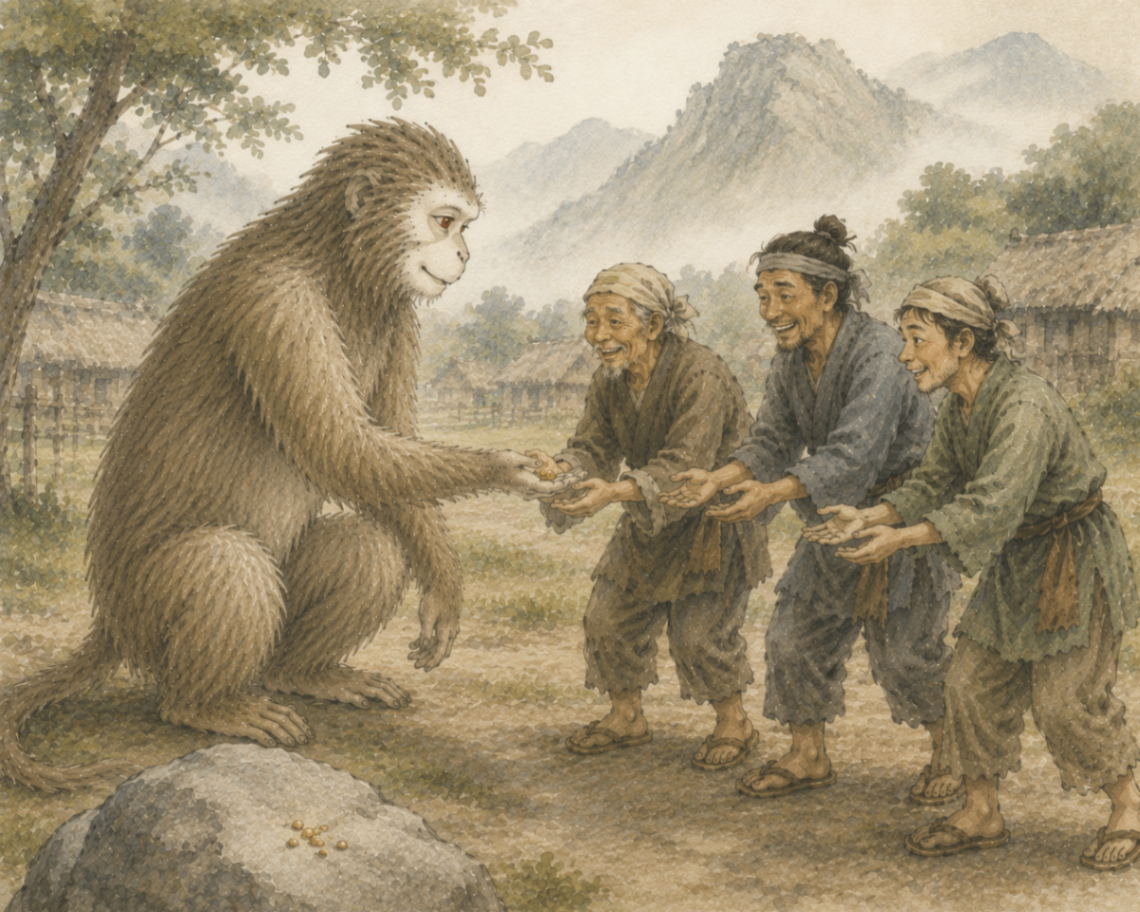
村人たちの笑顔
The Villagers' Smiles
1. Listen & Read
Aka was really happy because the old lady didn't run away from him and took the gold he handed her. As soon as he returned to the mountain, he dug into the earth and uncovered a large rock. He changed it into pieces of gold and went down to the village again. Three people were there, and this time, they approached Aka on their own. They extended their hands with smiles on their faces.
Aka told Ao delightedly about the reaction of the villagers. “No one runs away when they see me anymore! The villagers willingly approached me.“ But Ao said to Aka sadly, “They just want pieces of gold. It doesn’t mean that they like you.”
“They were so pleased when I gave them gold! The more gold I give them, the more friends I will make!"
Aka wouldn’t accept Ao’s words.
2. 単語
とても大きくてかたい石のこと。
“... he dug into the earth and uncovered a large rock.”
……山にもどるとすぐに大きな岩をほり出しました……
地面や土そのもの。地球という意味もあります。
“... he dug into the earth ...”
……山(地面)をほり出した……
だんだん近くに行くこと。
“... they approached Aka on their own.”
……村人がアカに近づいてきました。
うれしそうにわらうかおのこと。
“They extended their hands with smiles on their faces.”
村人たちはえがおで手をさし出してきます。
悲しい気持ちで、という意味。
“Ao said to Aka sadly ...”
アオは悲しげにいいました……
何かに対して見せる、行動や気持ち。
“Aka told Ao delightedly about the reaction of the villagers.”
アカはおおよろこびで、村人たちの様子をアオに話しました。
3. 熟語・表現
何かが起こると、すぐに次のことがおきるという意味。
“As soon as he returned to the mountain, he dug into the earth ...”
山にもどるとすぐに、地面をほり出しました……
自分の意志や自分の力で、という意味。
“... they approached Aka on their own.”
……村人が自分から近づいてきました。
だれかや何かからにげ去ること。
“No one runs away when they see me anymore!”
もうぼくを見てもだれもにげたりしないよ!
自分の手を前にのばすこと。
“They extended their hands with smiles on their faces.”
えがおで手をさし出してきました。
「そういうことではない」と伝えるときに使います。
“It doesn’t mean that they like you.”
お前のことをすきになってくれたわけじゃない。
4. 文法ポイント
because 〜(理由)
“Aka was really happy because the old lady didn't run away from him ...”
アカは、おばあさんがにげなかったのでとてもうれしかった。
「because + 主語 + 動詞」で理由を表します。
▶もっと詳しく
- 主節(うれしかった)+ because + 理由 の順でよく使います。
“I stayed home because it was raining.”
雨がふっていたので家にいました。
- because of と混同する(of のあとは名詞、because のあとは文)。
with + 名詞(〜のじょうたいで)
“They extended their hands with smiles on their faces.”
村人たちはえがおで手をさし出しました。
「with + 名詞」で、その動作をしている「じょうたい」を表せます。
▶もっと詳しく
- 「with a smile」「with tears」など、気持ちや動きの様子を表します。
“She listened with a smile.”
彼女はほほえみながら聞きました。
- with のうしろに動詞をおく(名詞が必要)。
The more ..., the more 〜(〜すればするほど…)
“The more gold I give them, the more friends I will make!”
もっと金があれば、もっとたくさんの村人となかよくなれる!
「The + 比較級 ..., the + 比較級 〜」で「〜すればするほど…」を表します。
▶もっと詳しく
- 前半が原因や条件、後半が結果を表します。
“The more you read, the more you learn.”
読めば読むほど、学べます。
- The more と the more の順番をかえてしまう。