最初のおくり物
The First Gift
1. Listen & Read
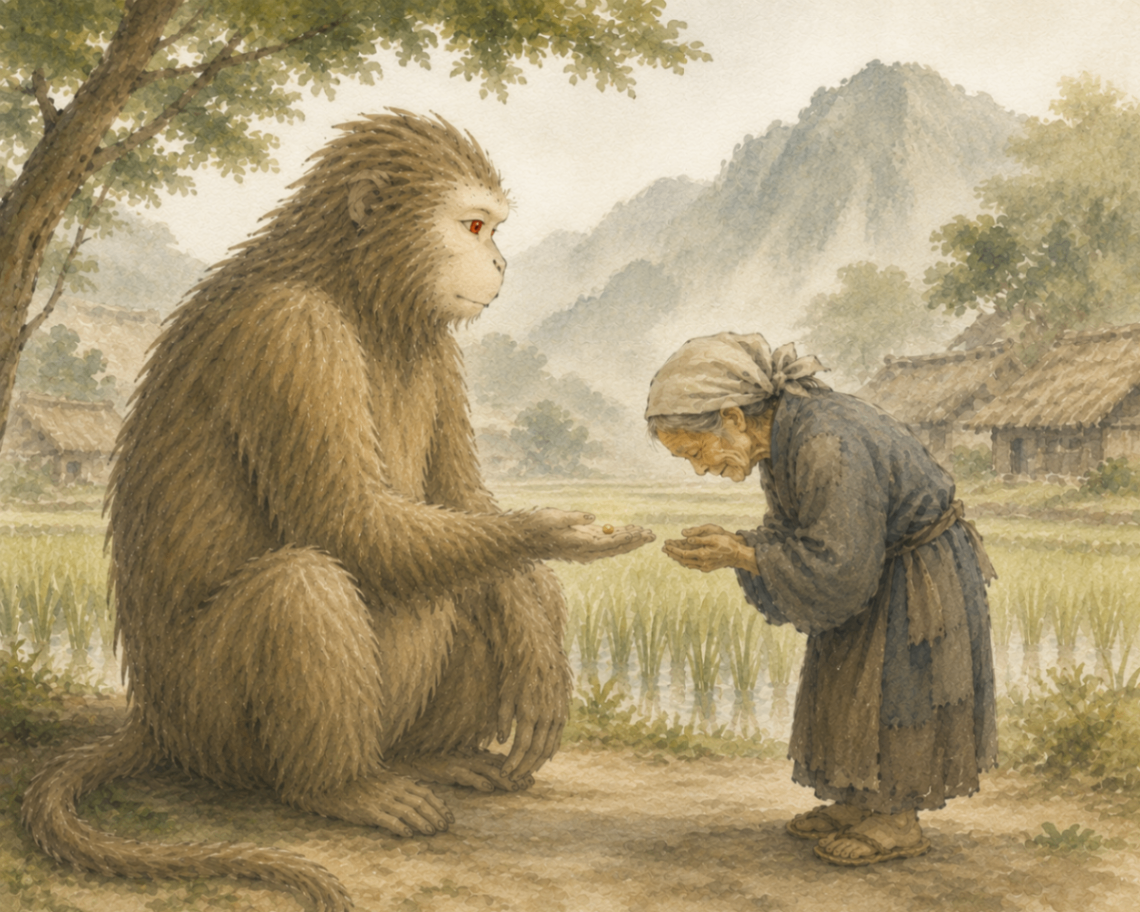
Aka immediately dug up a large stone with his long arms and tried to change it into gold. Soon, there was a piece of gold in his hand.
The next morning, Aka went down to the village with the gold and found an old lady cultivating her rice field. A dog started barking at him, but he ignored and quietly handed the gold to the lady.
The old lady took it with a shaky hand and bowed her head deeply to Aka. Gold was very valuable for the poor villagers because they could exchange it for food when they had a lean harvest caused by dry weather.
2. 単語
土などをほって、下のものを取り出すこと。
“Aka immediately dug up a large stone ...”
アカはさっそく大きな石をほり出して……
全体の一部分。数えられないものを数える時にも使う。
“... there was a piece of gold in his hand.”
……一つぶの金になりました。
女の人をていねいに言う言い方。
“... an old lady cultivating her rice field.”
……おばあさんが田んぼをたがやしている……
見て見ぬふりをすること。
“... he ignored and quietly handed the gold ...”
……アカはかまわずに金をさし出しました……
頭を下げて、あいさつや感謝を表すこと。
“... bowed her head deeply to Aka.”
……アカに向かって深く頭を下げました。
高いねうちがあること。
“Gold was very valuable for the poor villagers ...”
村人たちにとって金はとてもありがたいものでした……
3. 熟語・表現
その日の次の朝を指します。
“The next morning, Aka went down to the village ...”
よく朝、アカは村に行きました……
自分の手で相手にものを渡すことを表します。
“... quietly handed the gold to the lady.”
……そっとおばあさんに金をわたした……
あるものを別のものととりかえることを表します。
“... they could exchange it for food ...”
……いつでも食べ物にかえることができるからです。
きんちょうやおそれで、手がふるえている様子。
“The old lady took it with a shaky hand ...”
おばあさんはふるえる手で金を受け取ると……
何かをやり始めるという意味。
“A dog started barking at him ...”
犬がほえてきましたが……
4. 文法ポイント
動詞の過去形(〜した)
“Aka immediately dug up a large stone and tried to change it into gold.”
アカはさっそく大きな石をほり出して、金にかえてみました。
動詞のうしろに -ed をつけたり、形を変えて過去の出来事を表します。
▶もっと詳しく
- 規則動詞は -ed をつける(try → tried)。
- 不規則動詞は形が変わる(dig → dug, take → took, go → went)。
“She took my hand.”
彼女は私の手を取りました。
“He went home.”
彼は家に帰りました。
- 過去のことを ing 形で書く(正しくは過去形)。
find + 人・もの + 〜ing(〜しているのを見つける)
“... found an old lady cultivating her rice field.”
……おばあさんが田んぼをたがやしているのが見えました。
「find + 目的語 + ~ing」で「〜しているのを見つける/目にする」を表します。
▶もっと詳しく
- ~ing は「今その動作をしている」ようすを表します。
- see, hear, watch などでも同じ形が使えます。
“I saw him running in the park.”
彼が公園を走っているのを見ました。
- ~ing のかわりに to を使ってしまう。
because 〜(〜だから、〜なので)
“Gold was very valuable ... because they could exchange it for food ...”
金はとてもありがたいものでした。なぜなら食べ物にかえられるからです。
「because + 主語 + 動詞」で理由を表します。
▶もっと詳しく
- 文の後ろに置いて、「〜だから」の理由をくわしく説明します。
- 文の頭に置くこともできます(Because ..., ...)。
“I like him because he is kind.”
やさしいので、私は彼が好きです。
- because のうしろに名詞だけを置く(正しくは 主語+動詞)。