友だちがほしい
Aka Wants Some Friends
1. Listen & Read
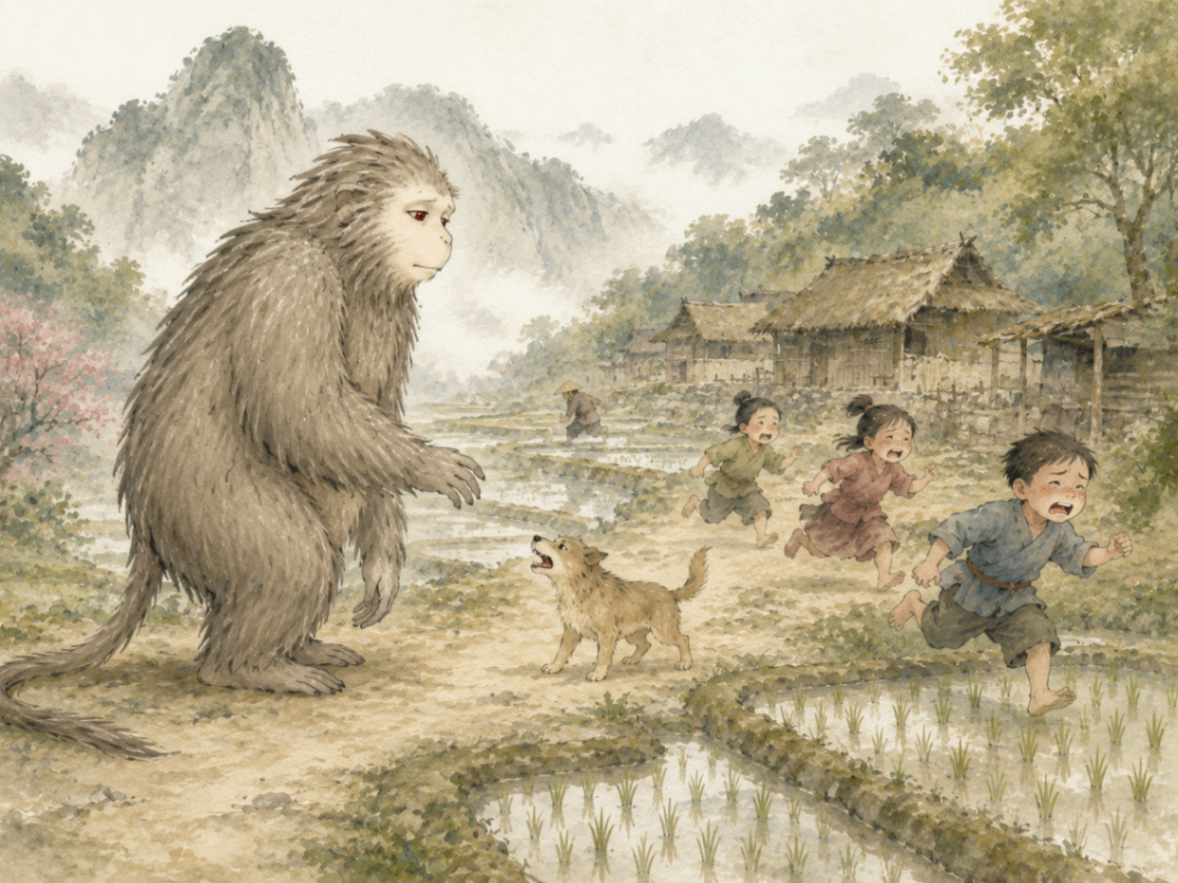
As Aka grew up, he wanted to make friends with the people.
There was a small poor village near the foot of the mountain where the villagers cultivated rice to make a living. Aka sometimes went down to the village to see the villagers. He could hear the laughter of children up ahead as he approached the rice field where they were playing tag. “It seems fun, I want to play with them,” said Aka to himself. But, every time he showed himself to them, dogs barked at him and children started crying and running away. Aka always returned regretfully to the mountain.
2. 単語
田いなかの、小さな町のような場所のこと。
“There was a small poor village near the foot of the mountain ...”
山のふもとには小さなまずしい村があり……
お金や食べ物などが少ない様子。
“... a small poor village ...”
……小さなまずしい村……
その村にくらしている人のこと。
“... the villagers cultivated rice to make a living.”
……村人たちは田んぼをたがやしてくらしていました。
田んぼでそだてる、日本人がよく食べる作物。
“... cultivated rice to make a living.”
……お米を育ててくらしていた……
人がわらうときの声や、わらうこと自体。
“He could hear the laughter of children ...”
子どもたちのわらい声が聞こえてきます……
犬が「ワン、ワン」と声を上げること。
“... dogs barked at him ...”
……犬はほえ……
3. 熟語・表現
だれかと友だち関係になることを表す言い方。
“... he wanted to make friends with the people.”
……アカは、人間たちと友だちになりたいと思うようになりました。
だんだん体や心が大きく育っていくこと。
“As Aka grew up, he wanted to make friends ...”
アカは大きくなるにつれ、友だちがほしくなりました……
働いてお金や食べ物をえて、くらしていくこと。
“... the villagers cultivated rice to make a living.”
……村人たちは田んぼをたがやしてくらしていました。
だれかを追いかけて、タッチする遊び。
“... where they were playing tag.”
……追いかけっこをしていた……
その場所から急いで走ってはなれること。
“... children started crying and running away.”
……子どもたちは泣きながらにげていきます。
4. 文法ポイント
As 〜(〜するにつれて、〜のときに)
“As Aka grew up, he wanted to make friends with the people.”
アカは大きくなるにつれ、友だちがほしくなりました。
「As + 主語 + 動詞」で、「〜するにつれて」「〜のときに」を表します。
▶もっと詳しく
- As は同時におきることや、少しずつ進む変化を表せます。
- 「〜につれて」「〜しながら」など、日本語に合わせて訳を変えます。
“As I grew older, I read more books.”
大きくなるにつれて、たくさん本を読むようになりました。
- As のうしろに「動詞だけ」を書く(主語+動詞が必要)。
There was 〜 near ...(〜のそばに〜があった)
“There was a small poor village near the foot of the mountain ...”
山のふもとの近くに、小さくてまずしい村がありました。
「There was + もの + 場所」で、その場所に何かがあったことを表します。
▶もっと詳しく
- 1つのもの → was、2つ以上 → were を使います。
- near, in, on, by など、場所の言い方といっしょによく使います。
“There was a big tree near the river.”
川のそばに大きな木がありました。
- 場所を表す語を最初におく(英語では最後に置きます)。
every time 〜(〜するたびに)
“... every time he showed himself to them, dogs barked at him ...”
……アカがすがたを見せるだけで、犬はほえ……
「every time + 主語 + 動詞」で、「〜するたびに」を表します。
▶もっと詳しく
- when とにていますが、「毎回」というくり返しをはっきり伝える言い方です。
“Every time he sees me, he smiles.”
私を見るたびに、彼は笑います。
- every times と s をつけてしまう(正しくは every time)。