アカとアオの兄弟
The Brothers, Aka and Ao
1. Listen & Read
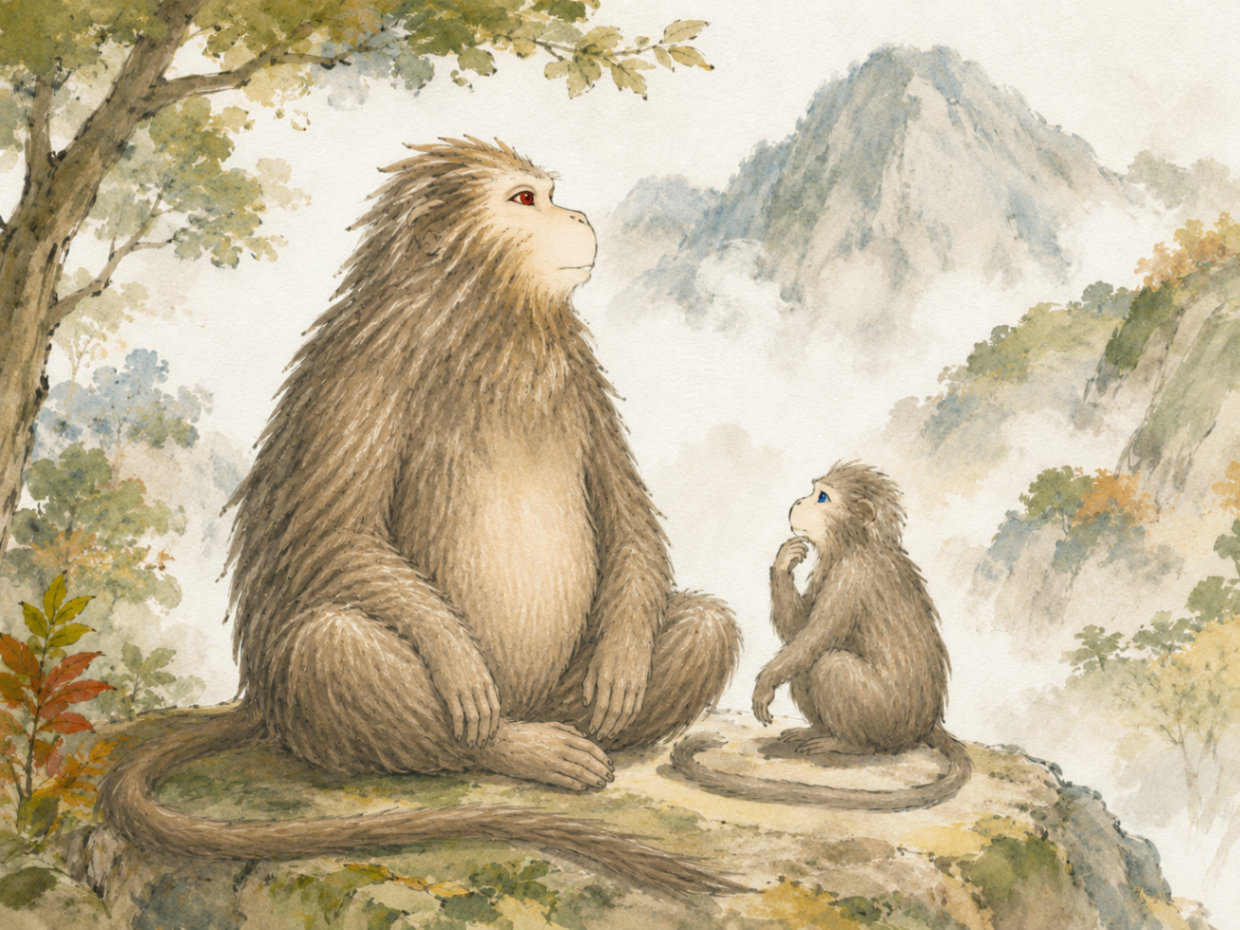
Once upon a time, there were two monkey brothers called Aka and Ao who lived on a mountain. Aka, the younger one, was very big and strong and had a red right eye. Ao, the older one, was very small and wise and had a blue left eye.
Soon after Aka was born, they lost their parents. So Ao took care of young Aka with all his heart and soul for many years. Ao taught Aka all sorts of things, such as how to find nuts, how to catch fish and shells in the river, the names of plants and insects, and about the people who lived near the foot of the mountain.
2. 単語
土地が高くもり上がったところ。
“... two monkey brothers ... who lived on a mountain.”
……山に住んでいた二ひきのサルの兄弟……
同じ親から生まれた男の子どうしのこと。
“... two monkey brothers called Aka and Ao ...”
……アカとアオという二ひきのサルの兄弟……
体や力がしっかりしていること。
“Aka ... was very big and strong ...”
アカは……とても大きくて強かった……
よく考えて、正しい行いができること。
“Ao ... was very small and wise ...”
アオは……とても小さくてかしこかった……
父と母をあわせて言うときの言葉。ふつう複数形で使う。
“Soon after Aka was born, they lost their parents.”
アカが生まれてすぐに、二ひきは両親をなくした。
かたい皮に包まれた木の実のこと。
“... how to find nuts ...”
……木の実の見つけ方……
水が流れているところ。
“... how to catch fish and shells in the river ...”
……川にいる魚や貝の取り方……
小さな生き物で、羽や6本の足を持つものが多い。
“... the names of plants and insects ...”
……草花や虫の名前……
3. 熟語・表現
物語の始まりでよく使う言い方。
“Once upon a time, there were two monkey brothers ...”
むかしむかし、二ひきのサルの兄弟がいました……
人や動物などをやさしく見守り、育てるという意味。
“Ao took care of young Aka ...”
アオは小さなアカの世話をした……
たくさんの種類があることを表す。
“Ao taught Aka all sorts of things ...”
アオはアカにいろいろな事を教えた……
前に言ったことの具体的な例をあげるときに使う。
“... all sorts of things, such as how to find nuts ...”
……たとえば木の実の見つけ方など、いろいろなこと……
何かのやり方を表す言い方。
“... how to find nuts, how to catch fish ...”
……木の実の見つけ方、魚のとり方……
山の一番下のあたりのこと。
“... the people who lived near the foot of the mountain.”
……山のふもとの近くに住む人たち。
4. 文法ポイント
there were 〜(〜がいた・〜があった)
“Once upon a time, there were two monkey brothers ...”
むかしむかし、二ひきのサルの兄弟がいました……
「there were 〜」は「〜がいた/あった」と言うときの形です。
▶もっと詳しく
- 基本の形:There + was/were + もの・人。
- 1つのときは was、2つ以上のときは were を使います。
- 日本語の「〜がある/いる」に近い言い方で、話に出てくる人やものを紹介するときに使います。
“There was a big tree.”
大きな木が1本ありました。
“There were many birds.”
たくさんの鳥がいました。
- 1つのものに were を使ってしまう(正しくは was)。
- 「〜がいた」を They were 〜 と始めてしまう。話に初めて出てくるものは There were 〜 で始めます。
関係代名詞 who(人を説明する言い方)
“... two monkey brothers ... who lived on a mountain.”
……山に住んでいた二ひきのサルの兄弟……
「who」は前の「人」を、後ろの文で説明するためのつなぎ言葉です。
▶もっと詳しく
- 基本の形:人 + who + 動詞 ...
- 「〜する人」というかたまりを作ることができます。
- 日本語では説明が前に来ますが、英語では説明したい人のうしろに who を置いて説明します。
“the people who lived near the foot of the mountain”
山のふもと近くに住んでいた人たち
- who のうしろに動詞を書き忘れる。
- 人ではなくものに who を使ってしまう(ものには which/that を使います)。
how to +動詞(〜のしかた)
“... how to find nuts, how to catch fish ...”
……木の実の見つけ方、魚のとり方……
「how to +動詞」で「〜のしかた/どうやって〜するか」という意味になります。
▶もっと詳しく
- 基本の形:how to + 動詞のもとの形。
- 「〜のやり方」を表すかたまりになり、文の中で名詞のように使えます。
- learn/know/teach などの動詞と一緒によく使います。
“I know how to swim.”
わたしは泳ぎ方を知っています。
“He learned how to read.”
彼は本の読み方を学びました。
- to のうしろを ~ing の形にしてしまう(正しくは動詞のもとの形)。